AI-Native Product Manager · Mumbai

Prateek Mehta

Product Manager who builds with AI. Eight years of solving operations problems across financial services taught me how to frame problems clearly, align teams, and ship. Now I bring that discipline to building AI-native products and I've built six in 2026 to prove it.

Open to PM roles · Mumbai

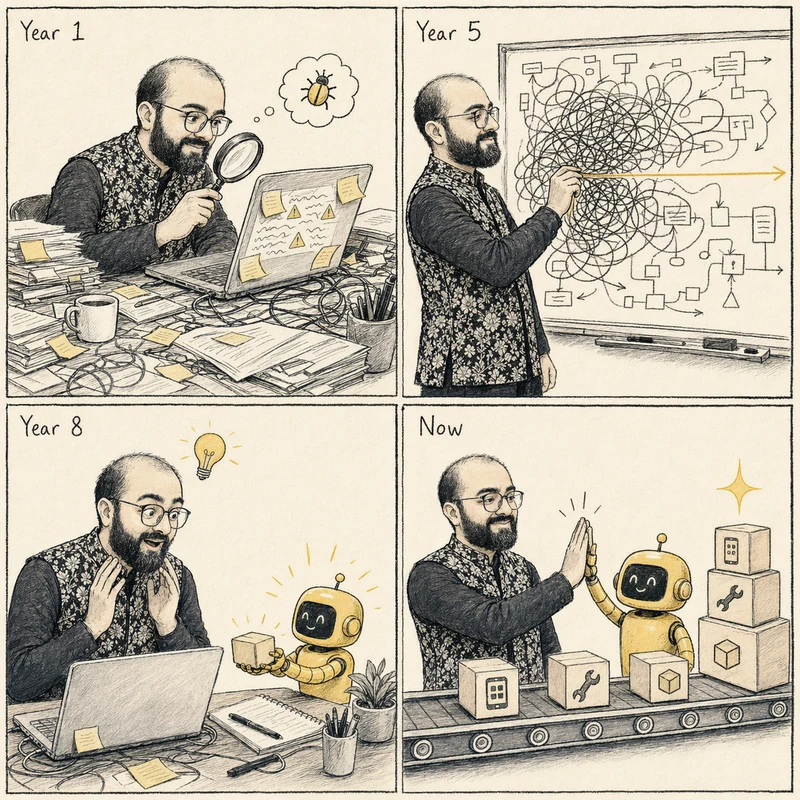
Four-panel comic of Prateek's career: testing and finding bugs, untangling systems as a BA, discovering AI, shipping AI-first products with an AI sidekick.

messy systems, clean shipping.

8+ Years in Business Analysis & Operations
180+ User Research Data Points
30% Avg Efficiency Gain Delivered
6 AI Products Built in 2026

Before the products. The real story.

Eight years untangling enterprise systems. The moment AI changed what was possible. The call I made when my kid was one and a half.

Nine pages on why I left, what I saw, and what I'm building now.

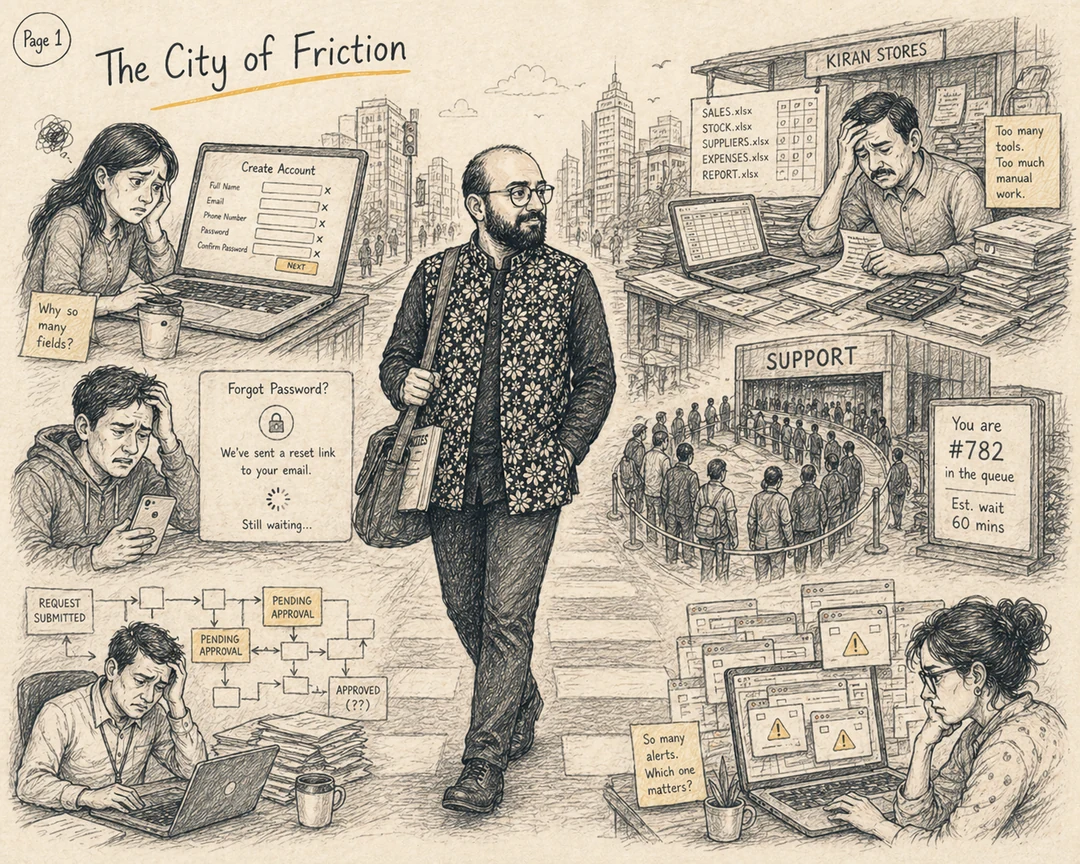
Comic page 1 of 9: The City of Friction — Prateek walks through a city of broken systems where users struggle with endless form fields, forgotten passwords, 60-minute support queues, and managers drowning in five open spreadsheets.
Page 1 of 9
Skip to the work →

Product Case Studies

The Problem

Women relocating to a new city, or long-resident with a fraying social circle, have no good tool for finding real friends. Dating apps are the wrong context. Professional networks are the wrong intent. Interest-based communities solve for the group, not the individual. The gap is a surface that takes safety seriously, respects time, and gets out of the way once a connection is made.

My Contribution

I led discovery and authored the full PRD — framing the problem space, deciding what features made the cut and what didn't, and writing the spec the team built against. I designed every page (visual design and UX flows) and ran end-to-end QA, raising bugs against the build. One teammate owned development; the rest of the 6-person Buildathon team pitched in on testing and strategy.

The Product

galpals is a matches-and-chats surface only. No feed, no groups, no stories, no games. Every new member completes a human-led video or phone verification call before seeing matches. Once inside, they see a small scored set of nearby women each week with a reason they would click.

Communication is intentionally low-friction and low-commitment: a wave with a preset reason or 100 characters of context. Mutual waves open a 1:1 chat. Max 3 lifetime waves to the same person. 30-day expiry. Nothing in the product tries to manufacture engagement.

Key Decisions

Manual verification, by design. Every member completes a human-led video or phone call before seeing matches. Automating it would be faster, but it kills the safety-first promise that makes the product different from dating apps and generic communities.

PWA over native. Lower friction to try, faster to iterate, no app-store gatekeeping. Right call for a 4-day Buildathon shipping window, still the right call as we iterate.

Matching scored on what predicts friendship, not popularity. Shared interests, looking-for overlap, neighborhood proximity, home state, city tenure, work situation, personality compatibility. Not "people you may know" — people you'd actually click with.

Brand Voice

The product should make it easier to find one real friend, not harder to leave the app. Every brand decision traces back to that one belief. Second person always. 14-word sentence cap. No emoji in system copy. Banned words: journey, tribe, vibes, community, seamless, authentic, curated.

What This Demonstrates

End-to-end PM ownership in a 4-day shipping sprint: discovery, PRD authoring, scope discipline, full-page design, and QA. Safety-first design with real operational consequences: verification is manual and human-led by design. And the ability to hold a product vision steady against the pull of engagement mechanics that would undermine it.
The Problem

35% of planned group trips never happen. Not because people stop wanting to travel, because the coordination breaks down. Dates never get aligned. Destination debates go circular. One person absorbs all the cognitive load. The gap is not in booking tools. MakeMyTrip and Booking.com handle that. The gap is in the chaotic stretch between "let's go somewhere" and "everything's booked," a stretch that runs entirely through WhatsApp, Google Sheets, and one exhausted organizer.

Discovery

132+ research data points: 27 interviews across structured conversations, qualitative retrospectives, and cross-group sessions, plus 105 survey responses. The finding that overturned the starting assumption: itinerary building is not the core pain. The trip dies much earlier. Date alignment was the #1 friction point for 80%+ of respondents. 35% of trips that never happened died specifically because dates could not be aligned.

The Solution

A link-based coordination tool that guides groups through the pre-booking sequence of dates, budget, destination, and commitment, via a shared dashboard. No app download for members. The organizer creates a trip in 10 seconds, shares a link, and the tool handles the rest.

Key mechanics: tap-to-select calendar with auto-overlap calculation, anonymous budget range slider with group sweet spot, destination voting with shake-to-decide tiebreak, hold-to-confirm commitment checkpoint, and a nudge library with 6 tone variants and dynamic member counts. Every feature traces back to a specific failure mode from the research.

Live Metrics (from production)

91.7% member activation rate. 85.2% 48-hour response rate. 1.5 days average time to lock dates against a 5-day target. 54.1% return visit rate against a 30% target.

What This Demonstrates

Primary research that changed the product direction before a line of code was written. Problem framing that eliminated four feature categories (expense splitting, booking integration, in-app chat, AI recommendations) on research grounds rather than scope grounds. And a clear architectural boundary: Plan Karo Chalo owns the coordination layer. Everything else belongs elsewhere.

The Problem

PM preparation has no readiness signal. Unlike engineering (LeetCode) or consulting (case math), aspiring PMs can complete every course on the internet and still have no idea whether they would pass a real interview. 84% of aspiring PMs receive no or vague feedback. Only 1 in 38 gets specific, actionable feedback regularly. The cost of applying too early is permanent — top companies trigger a 12-month cooldown on failed interviews.

Discovery

A 38-person survey and 6 interviews revealed not people who lacked competence, but people who lacked signal. Consultants with 7+ years, engineers who had shipped at scale, designers who had led UX for millions of users — all stuck in preparation limbo, spending lakhs on courses with no way to measure progress. Three personas emerged: Domain Expert, Tech Switcher, MBA/Strategy Transitioner. All three shared one problem: they could not accurately assess where they stood.

What I Built

A three-stage platform:

  • Stage 1 — Archetype quiz. A 10-minute, 12-question scenario quiz assigns a PM archetype: Consumer, B2B, or Technical.Why these three? Research surfaced them as the top PM archetypes by job-market presence — narrower categories would have starved the matching engine; broader ones would have diluted the signal.
  • Stage 2 — Adaptive AI-scored practice across six PM dimensions: Problem Framing, User Empathy, Structured Thinking, Prioritization, Metrics Reasoning, Communication. A five-slot engine (MCQ warm-up → weakest → second-weakest → mid → stretch) targets your gaps automatically.
  • Stage 3 — Real-job gap analysis. Paste any job description and get a Ready / Almost / Not Yet readout, with a specific improvement path and estimated time.Why three buckets and not a numeric score? A 7.3 vs a 6.8 doesn't tell you what to do. Ready means apply now. Almost names the specific gap. Not Yet says where to focus first. The buckets force a clear next action.

What This Demonstrates

Product discovery rigor — 38-person survey → three personas → MoSCoW prioritization → seven Must-haves shipped. AI treated as a calibrated feature, not a wrapper: the AI evaluator references the same rubric at 2am and 2pm, and scoring is deliberately tuned to resist inflation (5 = on track, 7 = genuinely strong, 9–10 = would impress a senior PM interviewer). In a market saturated with courses that promise transformation and deliver content, PMPathfinder's offer is narrower and harder: the truth about where you stand.

Operations & Transformation

The Problem

The Year-End Premium Adjustment process ran differently across five EU countries. Each market had its own workarounds and pain points, no shared workflow, and high-volume time-sensitive adjustments that left little room for inefficiency or error.

Discovery

I mapped the AS-IS workflows across all five countries to understand where the variations existed and why. Some were driven by local regulation. Others were legacy habits no one had questioned. I spoke with operations teams in each market to separate what was actually slowing them down from what leadership assumed the problem was.

Approach

Rather than forcing one workflow onto every country, I identified the common process backbone and isolated the variations that were genuinely necessary. Standardization where it created efficiency. Flexibility where regulation required it. Then I aligned stakeholders across five countries with different priorities, different leadership styles, and different appetite for change.

Outcome

Roughly 30% efficiency improvement across the five markets. Beyond the number, the bigger win was a repeatable framework for how the EU team approaches process harmonization, a model they can apply to future workflows.

What I Learned

Standardization is not about making everything identical. It is about finding the right level of consistency. The hardest part was not the process design. It was getting five country leads to agree on what good looks like. That is a stakeholder alignment problem, not a workflow problem.

The Problem

Client communication workflows across global banking operations were heavily manual. Teams spent significant time on repetitive low-value tasks that created bottlenecks, delayed turnaround, and introduced accuracy risks. The organization needed to reduce headcount dependency without compromising service quality.

Discovery

I mapped existing workflows, quantified time spent per task, and identified which steps were rule-based versus judgment-based. I worked closely with operations teams across CDD, Servicing and Transactions to understand not just what they did but why they did it that way.

Approach

I defined the automation requirements, wrote user stories, and partnered with technology teams to validate feasibility across the top 5 global markets. The key decision was sequencing: which markets to pilot first based on volume, complexity, and team readiness. I also standardized the underlying workflows before automating, because automating a broken process gives you faster broken output.

Outcome

Reduced manual work by 30 headcount equivalents. Improved turnaround time and accuracy. Standardized workflows across CDD and S&T, reducing operational inconsistencies that had been causing downstream issues for years.

What I Learned

You cannot automate your way out of a process problem. The real value was the standardization that happened before the automation. The humans in the loop matter too. If the ops team does not trust the automation, they build shadow processes around it. Change management is as important as the technical solution.

The Problem

The New Business insurance purchase journey was document-heavy, manual, and full of friction. Customers dropped off during onboarding, internal teams spent excessive time on manual processing, and slow testing cycles held back improvements.

Discovery

Over five years on this account, I built a deep understanding of the end-to-end journey, from first customer interaction to policy issuance. I analyzed where customers dropped off, where internal teams spent disproportionate effort, and where the process failed silently through rework cycles and duplicated steps.

Approach

Three parallel tracks. First, I prioritized and delivered 100+ enhancements by analyzing requirements against value and effort, because not everything requested was worth building. Second, I led the digitization of the purchase journey, replacing manual document-heavy steps with digital workflows. Third, I introduced an automation testing framework to speed up release cycles, because faster testing means faster iteration.

Outcome

Up to 30% cost savings from digitization. 10% improvement in customer satisfaction from redesigned user flows. 50% reduction in manual testing effort, saving 1,200 hours a year, which directly improved release quality and delivery speed.

What I Learned

The best improvements often come from removing steps, not adding features. The customer did not need a better form. They needed fewer forms. And the testing framework taught me that investing in infrastructure, the boring unglamorous work, compounds over time in ways that feature work often does not.

Work & Education

Education Aug 2012 – May 2016

BE (Information Technology)

Mumbai University / Ramrao Adik Institute of Technology

Work Mar 2017 – Jun 2022

IT Business Analyst

Tata Consultancy Services · Mumbai

Key outcomes
  • 100+ New Business enhancements shipped across insurance products (Agile SDLC)
  • 30% cost savings — digitised end-to-end insurance purchase journey
  • +10% CSAT after redesigning onboarding & policy-purchase flows
  • Cut manual testing 50% (1,200 hrs/year) via automation framework
Education Jun 2022 – May 2023

MBA — PGDM (General Management)

XLRI Jamshedpur

Work Jun 2023 – Mar 2025

Manager, Process Standardization

Standard Chartered GBS · Chennai

Key outcomes
  • Reduced manual work by 30 headcount — automated client communication workflows
  • Standardised CDD + Servicing & Transactions across top 5 global markets
  • Defined user stories & partnered with engineering to deploy automation
Work Mar 2025 – Dec 2025

Senior Manager, Business Analysis

Marsh McLennan India Pvt Ltd · Mumbai

Key outcomes
  • 30% efficiency gain — Year-End Premium Adjustment, top 5 EU countries
  • Centralization TOM defined for Placement Data Capture across 20+ countries
  • Access Authorization Framework rolled out to 500+ users EU-wide
Education Feb 2026 – Apr 2026

Member – AI-first Mastering Product Management 2.0, Cohort 7

Rethink Systems

Placed 2nd — AI-First Buildathon · 10-day build sprint
Work Apr 2026 – Present

Co-Founder, Product & Ops

Gal Pal · Remote · Mumbai

How I Think About Product

The best products are built by people who have sat close enough to the mess to know what simple actually takes.

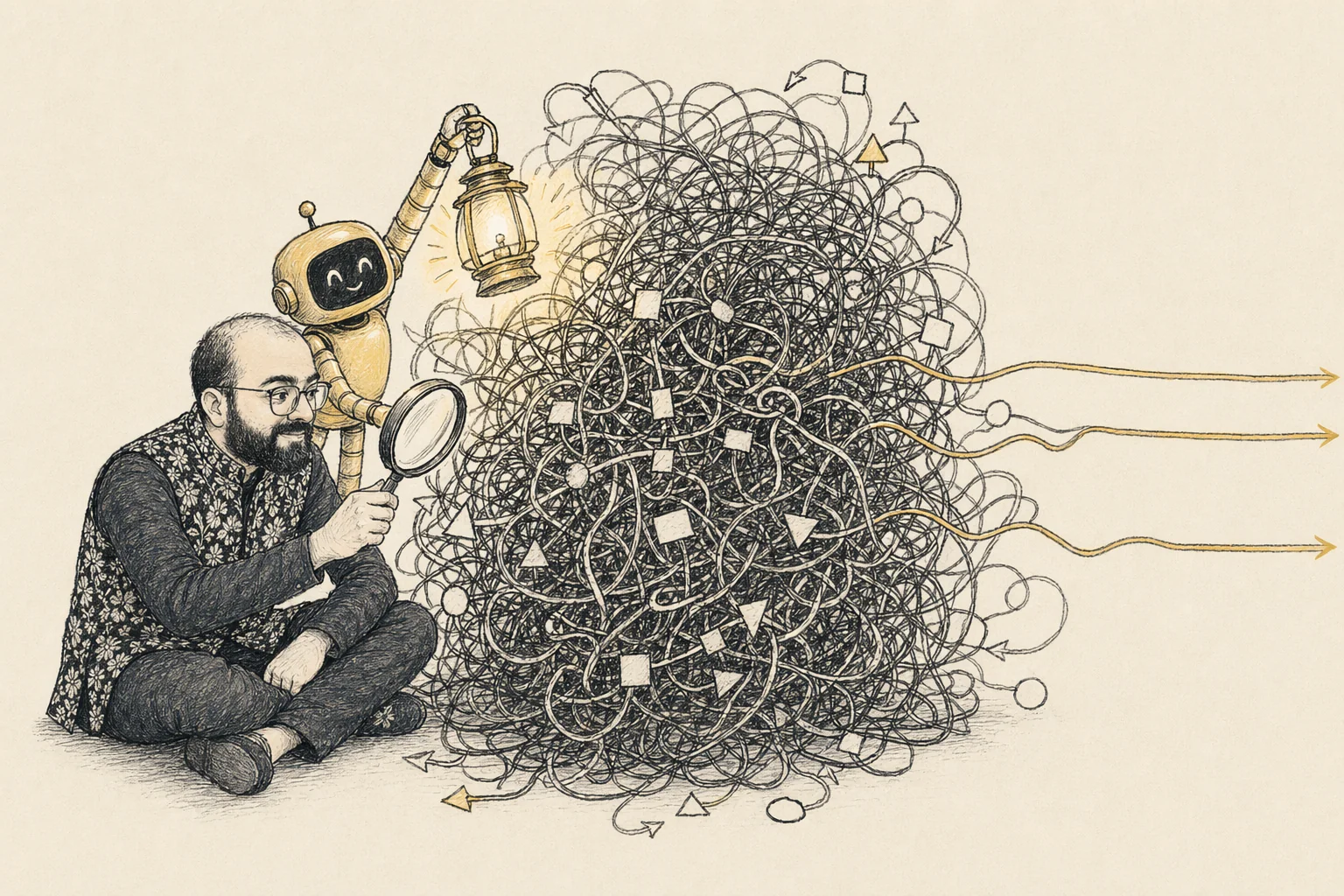
Prateek sitting cross-legged examining a dense tangle of processes, flowcharts, and arrows with a lantern-holding AI sidekick — clean marigold threads being pulled out to the right.

Structure before speed.

Most teams rush to solutions before the problem is clear. I frame problems so business, tech, and users can align on them. If you cannot explain the problem in one sentence, you are not ready to build.

Removal is underrated.

The most impactful changes I have delivered were not about adding features. They were about eliminating steps, reducing friction, and simplifying decisions. The customer did not need a better form. They needed fewer forms.

AI is a lever, not a feature.

I don't believe in adding AI to products. I believe in understanding user problems deeply, then asking whether AI is the right solution. Sometimes it is. Sometimes a better form field is the answer.

Show, don't pitch.

A working prototype beats a deck in ten seconds. With AI, I can build enough to test an idea in an afternoon. I bring working demos into discovery conversations instead of asking people to imagine what I mean.

What people say about working with me

On the AI-first MPM Cohort 7 at Rethink Systems

Prateek was someone who just got things done — no waiting around for permission or a perfect plan. When we were still figuring out what to even try, he'd already started building. He was one of the first in our cohort to dive into tools like Claude and Lovable, and he brought the same energy to leading discussions as he did to implementation. On top of that, he kept everything documented in a way that actually helped the rest of us stay aligned. Rare to find someone who's both a starter and a structurer.

K Ravi Kiran PM, Broadcom

On the Year-End Premium Adjustment harmonization across 5 EU countries

From the very beginning, he stood out for his exceptional ability to understand complex operations and break them down into clear, workable components. He consistently ensured that every feature we explored addressed a real and specific challenge, which made the direction of the project both meaningful and well-aligned with user expectations.

Ewa Leszczyna Broker / Client Executive, Marsh McLennan

On the Citibank Singapore account during TCS tenure

I had the pleasure of managing Prateek during his tenure on Citi projects as a Business Analyst, and highly recommend him for his professionalism and strong work ethic. His positive attitude stands out and makes him a delight to work with.

Aruna Rajagopalan Vice President, Citi

The thread that connects everything

I started at TCS as a tester — thinking like a user, finding the cracks. That instinct stayed. Five years as a BA on the ICICI Prudential and Citibank Singapore accounts taught me the most impactful changes come from removing complexity, not adding features. I cared more about the person than the system.

An MBA at XLRI sharpened the thinking. Then ops roles at Standard Chartered and Marsh McLennan kept showing me the same pattern: capable people spending days on tasks AI could handle in minutes. Not because anyone chose that. Because nobody had built the alternative yet. So I quit my job to learn what was actually possible. My kid was one and a half years old at the time.

I'm looking for a PM role where I own problems end-to-end and ship them. Best fit: a team building AI-native products, or one rethinking how their users work because of AI. I bring discovery discipline — and the habit of actually shipping.

If that sounds like your team, let's talk.

Get a heads-up when I ship something new

I send a short note when I ship a new product, finish a case study, or write something worth reading. No fixed cadence — usually once every few weeks at most.

Your email stays with me. No spam, ever.

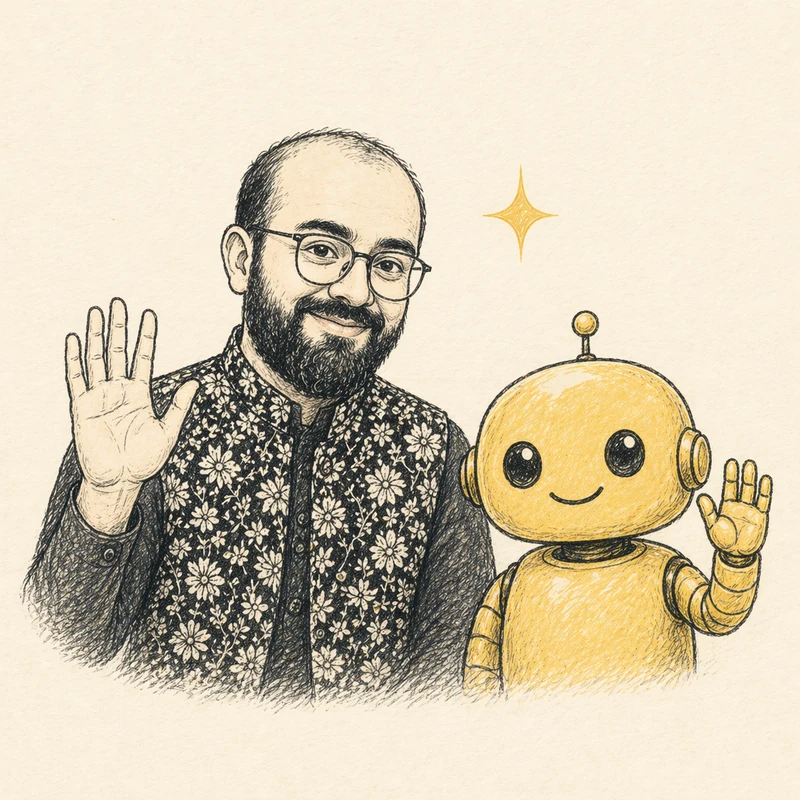
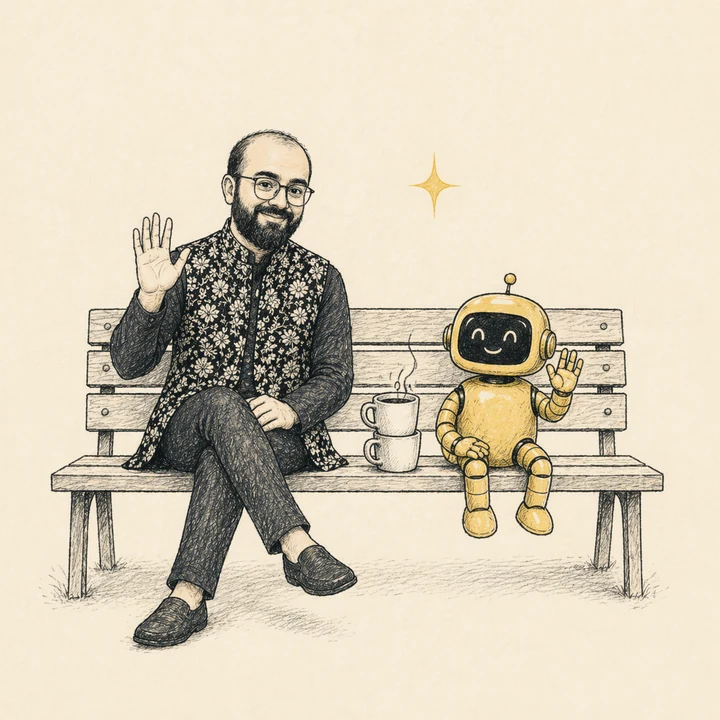
Hand-drawn illustration of Prateek waving next to a small marigold AI sidekick robot, also waving.

the AI sidekick & I will say hi.

Let's connect